
Publications
A list of NBPC publications, sorted by product type, that can be downloaded for free or ordered at a low cost to use at home, school, and events.
Informational handouts and flyers
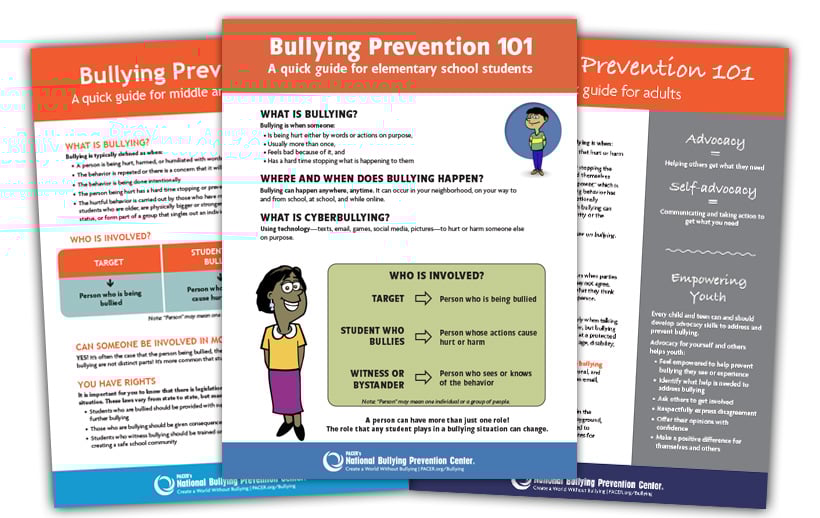
The three-version series with audience relevant content for elementary school students, middle and high school students and parents provides an overview of how bullying is defined, the roles involved, and helpful tips to address bullying behavior.
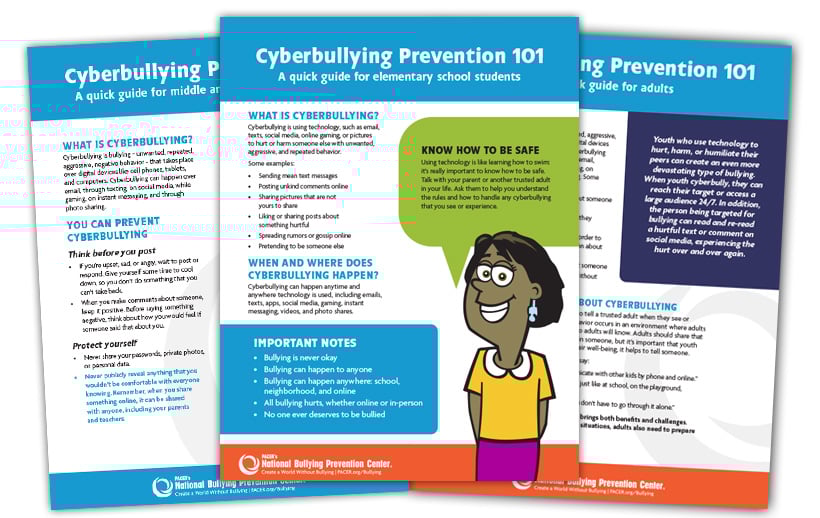
The three-version series with audience relevant content for elementary school students, middle and high school students and adults outlines how cyberbullying is defined, along with information on how to prevent and address the behavior.
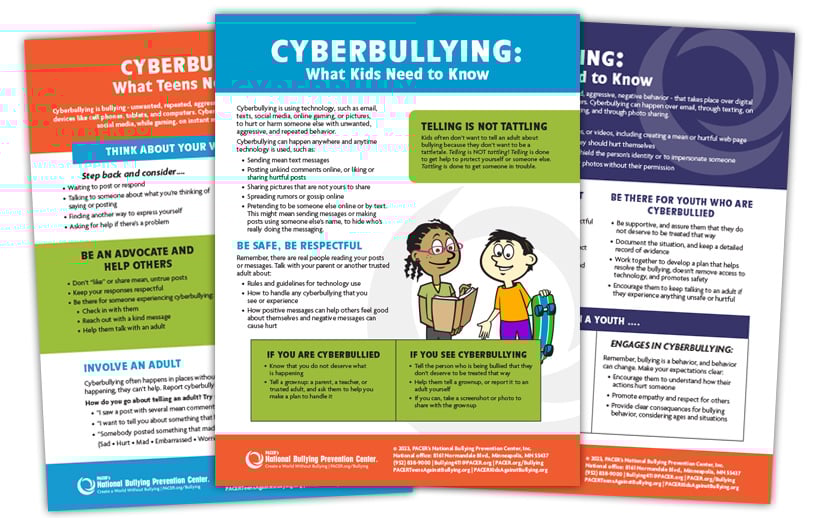
A three-version infographic series with audience relevant content for elementary school students, middle and high school students and adults. The format is designed to share on social media, print for the classroom, and use as an friendly to read resource.
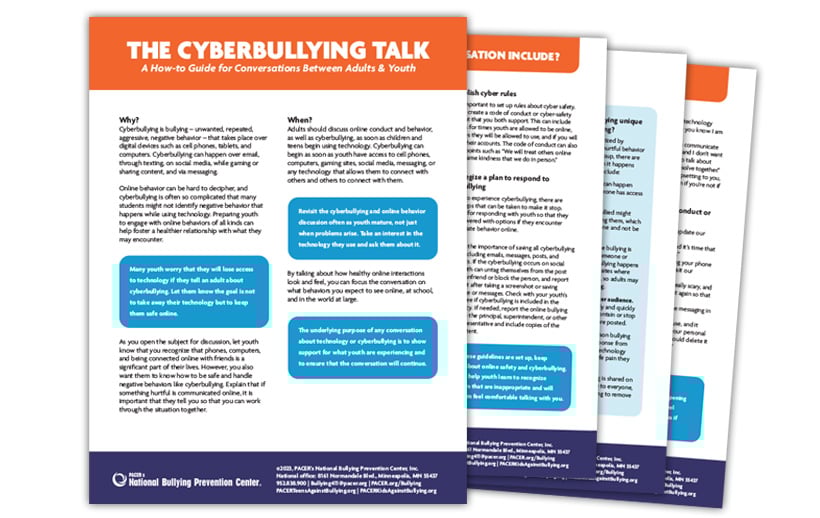
This four-page handout for adults features information about the why and when of talking with youth along with helpful tips that the conversation should include.
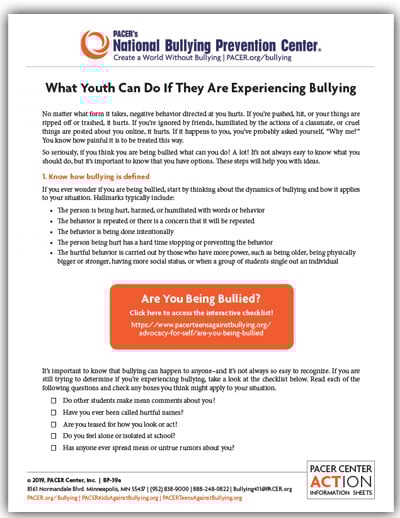
This four-part series provides comprehensive information for students and adults about how to help someone who is experiencing bullying, as well as how to address bullying in the community:
- What youth can do if they are experiencing bullying
- What youth can do to help peers who are experiencing bullying
- What adults can do to help youth experiencing bullying
- What communities can do to address and prevent bullying
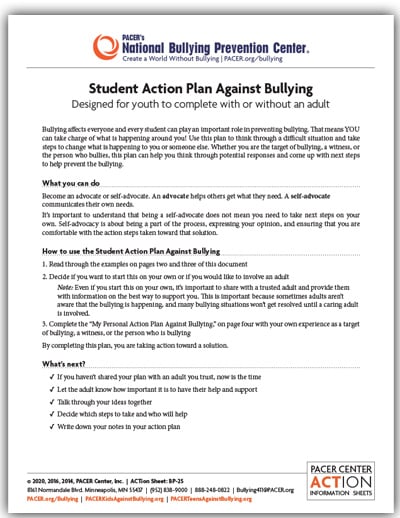
Are you an educator working with a student who reported bullying, a parent looking for ways to help your child respond to a situation, or a student who wants to take action against bullying, but aren’t sure where to start? The Student Action Plan Against Bullying is designed for youth to complete, with or without an adult, to help them think through a difficult situation and determine steps to change what is happening to them or someone else. Whether someone is the target of bullying, a witness, or the person who bullies, this plan, along with the guide for adults using it with youth, can help guide potential responses and action-based solutions. Available in English, as well as Spanish, Somali, and Hmong translations.
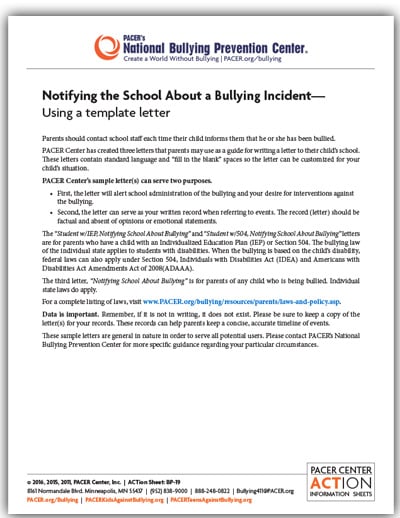
Template letters for parents to use as a guide for writing a letter to their child’s school. These letters contain standard language and fill-in-the-blank spaces so the letter can be customized for your child, including letters designed for students with a Section 504 or IEP. Available in English and Spanish translation.
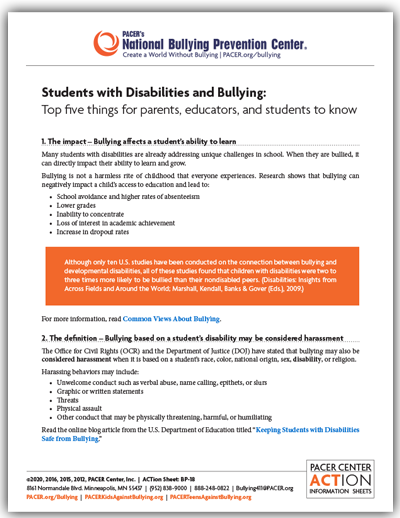
This handout provides an overview of important facts for parents, educators, and students to know about students with disabilities and bullying. Also available in Spanish translation .
Students now live at a time of instant access to cell phones, tablets, or computers, which open the door to exciting new ways of connecting, interacting, and learning. However, these new modes of communication also present new challenges for parents. Not only do parents have to help children and youth navigate in-person social situations, they also need to prepare them for healthy relationships online. This 16-page booklet has information on guiding children through this virtual world.
Free to download | Order print version for $5.00 per copy.
Este folleto de 8 páginas contiene información sobre qué hacer cuando se usa la tecnología para hacer ‘Bullying’. Lo puede bajar en forma gratuita.
Common views and myths about bullying
In spite of the significant impact that bullying can have on a target, it often continues to be viewed as acceptable behavior. There are many misconceptions that adults may have about bullying, all of which can lead to minimizing the behavior.
Help your child recognize the signs of bullying
Children may not always realize that they are being bullied. They might think it is bullying only if they are being physically hurt; they might believe the other child is joking; or they may not understand the subtle social norms and cues. Children can benefit from a definition of the differences between friendly behavior and bullying behavior
When a child is a target of bullying, parents need to document the events and develop a record (or history) of what is happening to their child. This record is useful when talking with school educators, law enforcement personnel, or other individuals who may need to assist parents in intervening against bullying.
How to effectively engage a child who is showing bullying behavior
The word “bullying” often evokes an emotional response. When you are trying to engage with a child who is exhibiting bullying behavior, it is important to acknowledge your emotions before developing an action plan to help the child. Additionally, recognizing the different situations in which bullying can occur and acting to change the behavior is vitally important in making the future safer for all children.
Telling classmates about your child’s disability may foster acceptance
Parents often become experts on their child’s disability. Through their own learning process, many see the value of teaching their child’s classmates about the effect of the disability at school. Parents and professionals find that if classmates understand a child’s disability, they may become allies in helping the child.
Bullying prevention for children with disabilities: Using the IEP, 504, or creating your own plan
When any child is bullied, it is important to take action to get the bullying to stop as soon as possible and prevent it from happening again. Using tools like an IEP (Individual Education Program) or 504 Plan can help design strategies for bullying prevention that take into consideration the child’s disability, their social skills, the environment around them, and more. When a child does not have an IEP or 504 Plan, families can still help by constructing a plan together with a team of caring adults at school to work on similar bullying prevention goals and strategies. Enlisting adults like teachers, counselors, and other staff to participate in generating ideas and decision-making for bullying intervention or prevention can create a safety net for children — with disabilities or without — that allows them to receive their education in a healthier environment. Learn more at Questions Answered.
Use positive strategies to protect your child with disabilities from bullying
Although few studies exist concerning children with disabilities and bullying in the United States, the studies available indicate an increased risk for children with special needs. Parents can help protect their children with disabilities from bullying and its devastating effects if they promote effective strategies.
Books and booklets
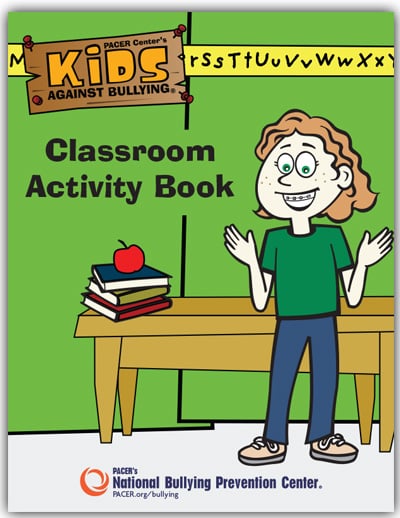
Kids Against Bullying Classroom Activity Book
Eight-page classroom activity book designed with educational activities that incorporate the KidsAgainstBullying.org website. It engages young learners in creative ways, incorporating the Club Crew cast from the Kids Against Bullying website. The content provides activities to help students think about their feelings, explore responses to bullying situations, and take the pledge to be a Kid Against Bullying.
Free to download, full color or black/white.
This 70-page comprehensive guide offers prevention strategies for children, and the information and practical tools parents and other adults need to take action to address and prevent bullying.
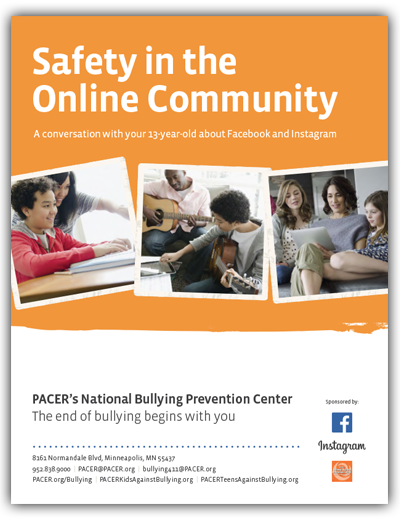
Safety in the Online Community: A conversation with your 13-year-old about Facebook and Instagram
Facebook and Instagram partnered with PACER’s National Bullying Prevention Center to create a guide and checklist to help parents talk with their teens about using social media. The guide covers setting up a new account, safety tips, and commonly asked questions. Download the guide and checklist for free.
Resource Kits, Posters, and Bookmarks
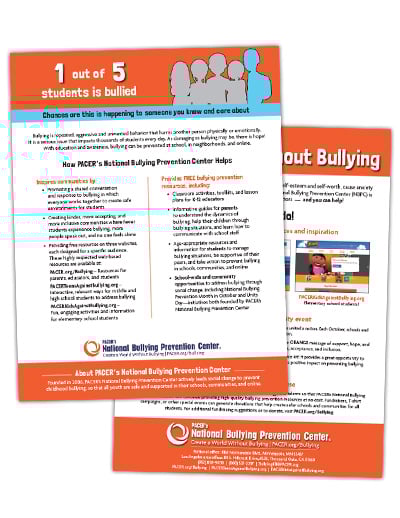
A free, colorful, and informative 8 ½ x 11 (two-sided) flyer, available in English and Spanish translation, that outlines the creative resources, outreach activities, and opportunities available from PACER’s National Bullying Prevention Center (NBPC).
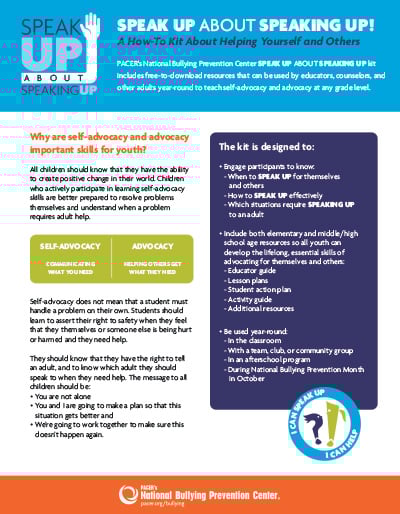
Free, ready-to-use resources for educators, counselors, and youth leaders. The kit can be used year-round with students of all ages to help them learn and practice the lifelong skills of self-advocacy and advocating for others.
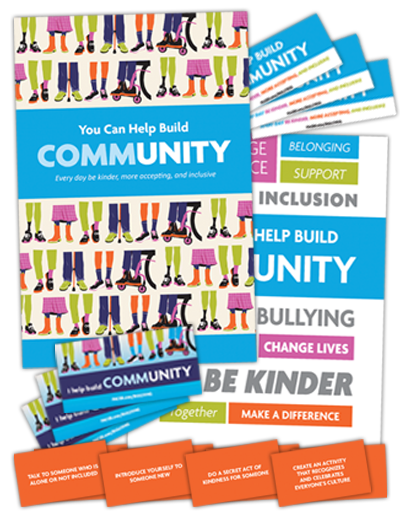
The Kit ($30) is designed to encourage coming together for a common goal: to make stronger connections among each other to help prevent bullying and create a healthier environment for all. The kits contain a guide, poster, decals, action card, sticky notes, and handouts for at least 30 participants, with 2 design options to choose from. The content is appropriate for kids, teens, and adults.
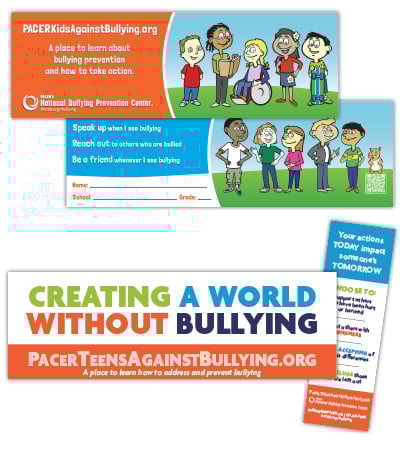
The “KidsAgainstBullying” bookmark for elementary school students invites students to take the “Be A Kid Against Bullying” pledge. The other side features the characters from the Club Crew.
The “TeensAgainstBullying” bookmark for middle and high school students shares the message, “Together We Can Help Create A World Without Bullying.” The reverse side helps teens think of the actions they can take to change their world.
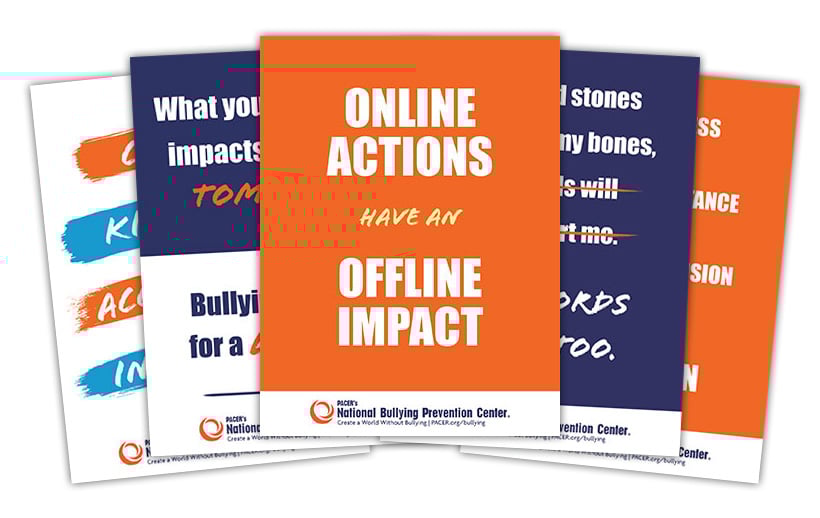
Order, download, print, or share one or all of these posters featuring compelling bullying prevention messages. Display year-round in the classroom, hallway, or lunchroom. Available in English and Spanish translation.
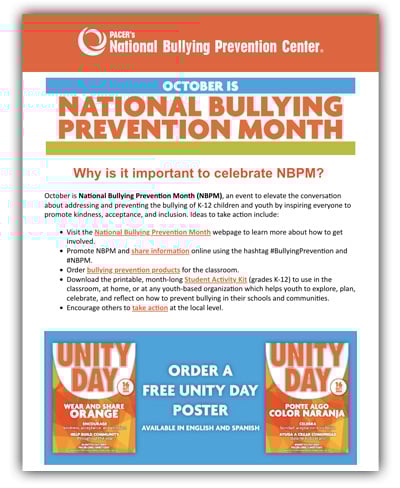
Subscribe to the receive the e-newsletter which features the up-to-date information including event, stories, and resources. Subscribe to the receive the e-newsletter which features the up-to-date information including event, stories, and resources.
Articles by PACER’s NBPC Staff
5 Ways to Prevent Bullying in the Classroom
An article with tips to prevent bullying in the classroom, and featuring resources of PACER’s National Bullying Prevention Center. Published by PBS Teacher’s Lounge.
When Friends Are The Ones Doing the Bullying
Sometimes bullying behavior comes from the last person you would expect. This article looks at what parents can do when their child’s friend goes from friend to “frenemy.”
Bullying Affects All of Our Kids, Even If They Aren’t the Target
Bullying affects everyone involved. Whether the child is the target, a witness, or the person who bullies, the end result is that everyone feels less safe. Children aren’t responsible for resolving a bullying situation, but their opinions about how to proceed should be encouraged and respected.
Speaking Up About Being Bullied Isn’t “Tattling”
Many children who are bullied don’t report it. Younger children often don’t recognize bullying behaviors, and may be afraid they’ll be called a tattletale, or worse, if they tell an adult. It’s especially important to talk openly with your young child about bullying behavior, and to explain the difference between tattling and telling.
Preventing Bullying of Students with Disabilities
Did you know that a student with a disability is two to three times more likely to be bullied? Bullying can affect a student’s physical and emotional health and it can interfere with a student’s right to receive an education. Posted to StopBullying.gov blog on October 17, 2016.
Is Your ASD Child Being Bullied? Five Ways to Take Action
When your child is the target of bullying, your first response is often an emotional one, followed by wanting to act in the most effective, action-oriented way. This article offers a few helpful suggestions. Published in Autism Parent Magazine blog, March 2021.
5 Things You Should Know About Cyberbullying
While today’s technology provides young people with new and meaningful ways to connect and communicate, it also presents new challenges. This article explore the rise of cyberbullying, the use of technology to bully. Published by Family Online Safety Institute (FOSI), December 2019.
Cyberbullying Starts Earlier Than You Might Think — Here’s How to Protect Your Child Now
With kids now owning smartphones as young as age 6, knowing the basics of cyber safety is key.
What Every Parent Needs to Know About Protecting Their Child from Cyberbullying
Bullying behavior has been around forever, but cyberbullying presents new challenges – and kids today are the first to experience them.
Helping Your Child Understand Cyberbullying
It was just a generation ago that kids and teens were asking their parents for a phone line in their room so they could easily and privately connect with more friends. Today, a student’s desire to connect with friends has not changed, but the options for doing so have grown tremendously. While young people’s access to technology has evolved over the years, so has the way we communicate with children about online safety and cyberbullying. Posted to Spring 2017 edition of Our Children, the National PTA Magazine.
Also, be sure to visit:
- Order Products for printed bookmarks, posters, resource kits, and more
- Recursos Para Adultos y Estudiantes Acerca de Bullying for Spanish translations
- Students with Disabilities and Bullying for disability advocacy information
- Cyberbullying for publications about bullying through technology